
← Selected Works Aurora World · OWIS · May 2025 – May 2026

OWIS — Virtual Idol
Performance System

Role Sole Unreal Engine Developer · 3D Technology Team
Studio Aurora World · Seoul
Technology Unreal Engine 5 · OptiTrack · MANUS · MotionBuilder · LiveLink · ARKit
Delivered to MNet · MBC · Studio Choom
Virtual idol production stage — motion capture and Unreal Engine 5
20+ Live broadcasts
delivered
MNet · MBC Studio Choom &
content partners
6.7M Views on an OWIS
music video
Sole Unreal Engine developer
on the team

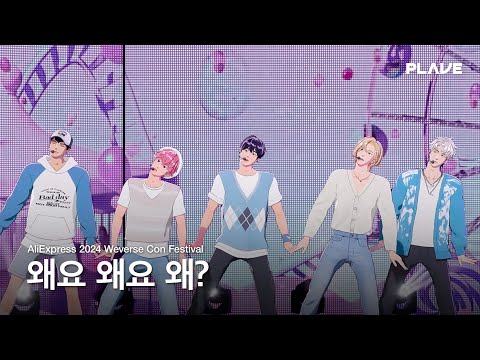
OWIS is a K-Pop virtual idol group from Aurora World. Their performances don't feature human performers on a physical stage — they feature real-time digital characters, driven by live motion capture, broadcast to millions of viewers on MNet, MBC, and Studio Choom.

I joined Aurora World's 3D Technology Team as the sole Unreal Engine developer. My responsibility was building and owning the full performance system — from the moment a performer stepped into a tracking suit to the moment a virtual character appeared on a broadcast stage.

When it works, the audience sees a character perform. They feel the energy, the expression, the weight of movement. They don't think about the technology. When it breaks — a dropped frame, a glitch in a hand, a moment of lag between gesture and character — the illusion ends in front of everyone watching. Live broadcast has no cut. No second take. No fix in post.
Game development tolerates occasional hitches. A player might not notice a dropped frame in a fast sequence. A live broadcast audience will. There is no error budget once the show is running — the system either performs at the required fidelity or it visibly fails in front of the audience, with no way to interrupt, reset, or fix in post.

The second constraint is performance fidelity. The performer's expression, weight, and physical intention need to carry through the translation into a digital character intact. Position data is not enough. The character has to feel like a performer, not a puppet — and that difference is immediately visible to a live audience watching a stage.

  • Sole Unreal Engine developer on the team — owned the full real-time performance system end to end
  • Built the full-body motion capture pipeline: OptiTrack → MANUS gloves → MotionBuilder → Unreal LiveLink → ARKit face tracking
  • Developed custom occlusion correction using MANUS rotation data to reduce limb distortion during live performance
  • Implemented MetaHuman facial and body animation pipelines calibrated for broadcast-grade fidelity
  • Built real-time camera switching, gesture-triggered VFX, multi-character control, and object interaction triggers
  • Developed broadcast UI, live operations tooling, and stage systems used during every live show
  • Wrote Blueprint and C++ systems optimised for reliability under live conditions — no second takes
  • Delivered 20+ live broadcasts, each approximately 1–1.5 hours, to MNet, MBC, Studio Choom, and external content partners
  • Motion capture content I worked on appears in an OWIS music video with 6.7 million views

The pipeline runs from OptiTrack skeletal data through MotionBuilder retargeting, into Unreal via LiveLink, layered with MANUS finger data and ARKit facial capture — all simultaneously, all in real time. The data from each source arrives at different frequencies and must be synchronized before it reaches the character rig.

One specific engineering problem: limb occlusion. When a performer's arm crosses their body, the optical tracking loses clean line-of-sight and produces distorted joint rotations. I built a custom correction system using MANUS rotation data as a secondary reference to reduce this distortion during live performance — the kind of problem that only surfaces under show conditions and has no off-the-shelf solution.

In a broadcast environment, jitter compensation and fallback state machines are not optional. A dropped packet during a live show is a visible failure. Every system was built to handle degraded conditions gracefully before the audience notices.